
Curious Finds
contextual design · design concept · university project · 2024
Curious Finds is a tool designed to empower clean-up activists to create small, distributed exhibitions that promote environmental awareness. By combining AI, multi-sensory input, and emotional storytelling, it transforms public spaces into engaging and impactful experiences.
Goal
For this university project, our team collaborated with two groups of activists to explore how we could best support their work and develop a meaningful concept.
Tools: Figma, Photoshop, Miro (Data Analysis)
Team: 3 students
Time budget: big semester project
What's Clean-Up Activism?

Clean-up activism, focuses on reducing pollution and promoting healthier, cleaner communities. Activists engage in activities like collecting litter, restoring polluted areas, and organizing community clean-up events. The movement aims to foster environmental and community engagement, raise awareness, inspire behavior change, advocate for policy improvements, and protect natural habitats.
User Research
For this project we fucussed on understanding the context of clean um activism fully to build a product that just fits

Interviews
We kicked off with interviews with three cleanup activists from a group in Gießen, focusing on their goals, methods, and the pain points they encounter in their activism.

Observations
To immerse ourselves in the topic, we joined a cleanup walk in Munich, observing activists and bystanders alike and asking both groups questions to better understand the culture behind the movement and how it resonates with outsiders.
Spread the Message
Reach people outside the activists bubble and trigger contemplation on the topic of environment and littering
Through the interviews, we found out what cleanup activists hope to achieve: raising awareness about the importance of keeping one’s surroundings clean and encouraging people to dispose of their trash responsibly. For climate activists and those close to them, this message is already familiar. But many others rarely reflect on the issue—so activists organize cleanup walks to demonstrate, rather than just explain, how pleasant a clean environment can be and how much unnoticed waste accumulates around us every day.
But How Can We Do That?
With our solution, we tried to extend on the way the activists are already working and communicating

Don't Tell me What to Do!
During their walk, the activists did not actively approach bystanders; instead, passersby were drawn in by their own curiosity. Some stopped to watch the activists at work, or even ask questions.

Let's Keep our City Clean!
In the interviews, the activists expressed a deep attachment to their city, which motivates them to keep it clean. They hoped to pass on this sense of responsibility to others who share the same environment.

Create Activism that Stays After a Walk
The activists noted that their efforts often seem to disappear shortly after a cleanup walk, as their impact usually reaches only those who happen to see them in action.

Make it Personal - Trigger Emotions
Additional desk research revealed that approaches appealing to people’s emotions and connecting them to the topic on a personal level can strongly influence their future actions and thoughts.

Use Litter as Conversation Starter
During the cleanup walk, participants bonded over the shared task of collecting trash, sparking conversations as they came across unusual or surprising items.
Design Directions
Based on our research insights, we developed five design directions and chose two to continue with

Interactive Installations
We wanted to create a solution that would last beyond a cleanup walk. One of our ideas was to help activists design public installations that could be placed in the areas where their cleanups take place. This way, people living in the neighborhood can learn about the cleanups and engage with the activists’ message in an interactive way, even after the event is over.

Emotional Storytelling
This design direction aimed to help activists communicate their goals to people outside their usual circles, in a playful way that avoids sounding moralizing. Storytelling could serve as a bridge, connecting people to the issue on a personal level by highlighting their relationship with their own city or neighborhood.
The Concept
The concept encourages activists to collect the most interesting objects they find during clean-up walks and display them in small jars around the area. Using a companion web app, they can add short audio stories to each object, turning pieces of trash into small moments of discovery. By scanning a QR code, passersby can listen to these playful, emotional stories, told from imaginative viewpoints like a tree or a duck, which makes the message feel friendly, engaging, and easy to relate to.
Feedback
To gather feedback on our concept, we created a low fidelity mock-up. We shared this prototype with friends and family as well as five activists from Clean Up Gießen and observed their response coupled with a handful questions.
The concept was considered to be immersive and interesting as well as practicable for the activists routines. We collected further feedback that we incorporated into our prototype.
The audio conveys emotions well -> Special effects and type of voice are important for immersion
The exhibition might get vandalised -> The exhibition is created to be short-lived & reinstalled after each walk
The small exhibition jars might get overlooked
-> Goal: Catching attention through number
Activists want to be able to manage the message of the exhibitions -> Tools are needed to control story output
The activists have limited capacities (time and money)
-> The creation process needs to be easy & cheap


.png)
The App Prototype
A tool that helps activists create AI-generated stories for their mini-exhibitions, allowing them to share their message with others after a clean-up walk.
1. Step: Collect Some Trash
During clean-up walks, activists often find pieces of trash that catch their attention, maybe because there are many of them, they look unusual, or they seem out of place. These interesting finds form the starting point of our concept.
3. Step: Create an Exhibit & Set It Up
Next, the application generates a QR code that links directly to the finished audio story.
Activists then receive simple instructions on how to set up their exhibit: place the found object in a transparent jar, print and attach the QR code, and position the jar somewhere within the local area.
2. Step: Create a Story
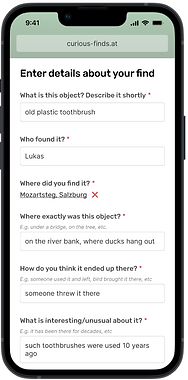
Activists can use our web application to enter a few details about the piece of trash they collected, such as where they found it, how it might have ended up there, and its possible impact on the environment.
The application then uses a generative AI model to create a short story and automatically produce an audio version of it. Activists can edit the text, adjust sound effects, or replace the story with their own writing or recording.

The Exhibition Prototype
The final exhibition is made up of several jars, each containing a unique find. Curious passersby can scan the attached QR codes to listen to an immersive audio story.

Curious? Give it a listen:
Making Of: the Audio Story
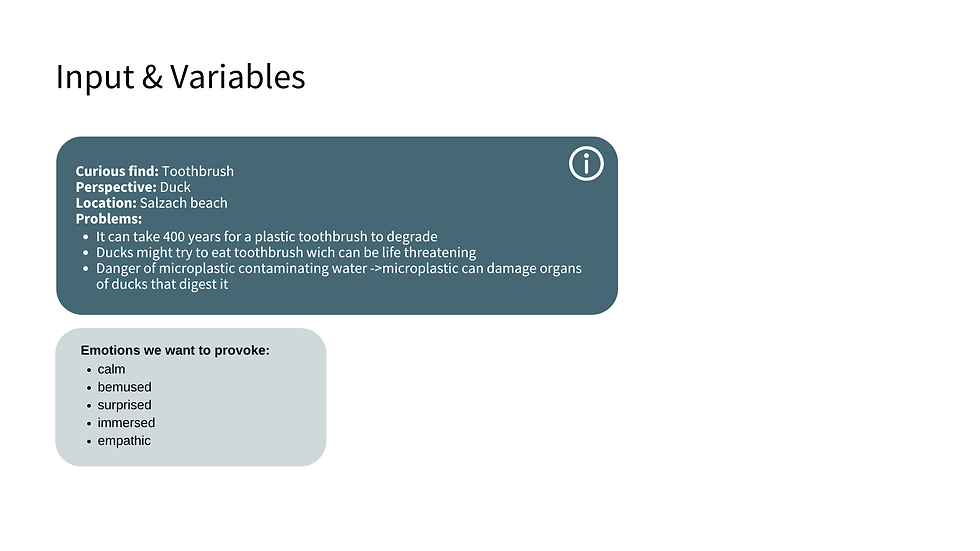
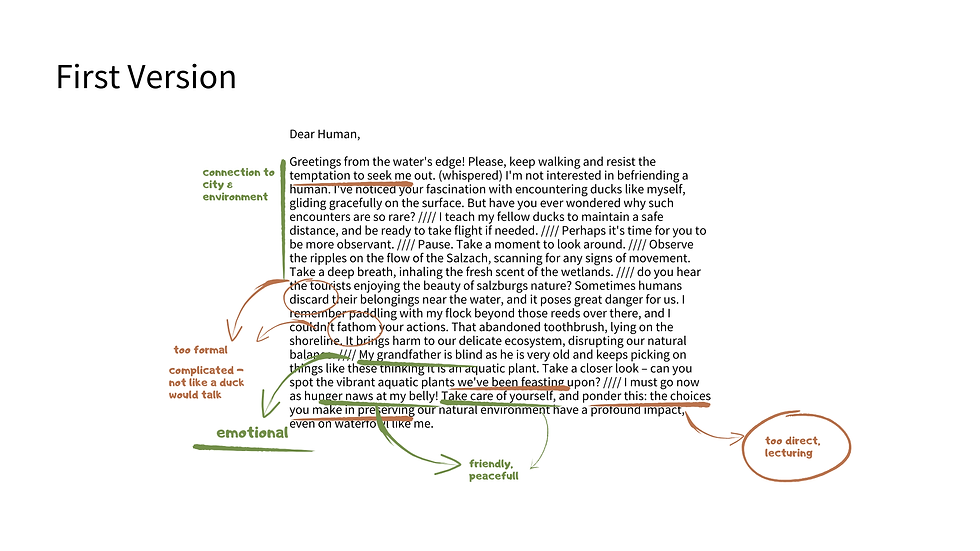
We created the story using ChatGPT and then refined it by hand. Afterward, we recorded the narration and added sound effects to build a prototype that closely matched our vision.

Reflection
The focus of this project was understanding the users and their real context of use.
By immersing ourselves in the environment of the clean-up walks through observations, and by keeping the topic open until we spoke with the activists, we ensured the project was genuinely driven by user needs.
This approach helped us arrive at a solution that fit not only the activist's goals but also their culture.
Let's keep our environment clean!


